The MCP Playbook
The Missing Layer in MCP

What if AI systems could discover not only capabilities, but also the best way to combine them?
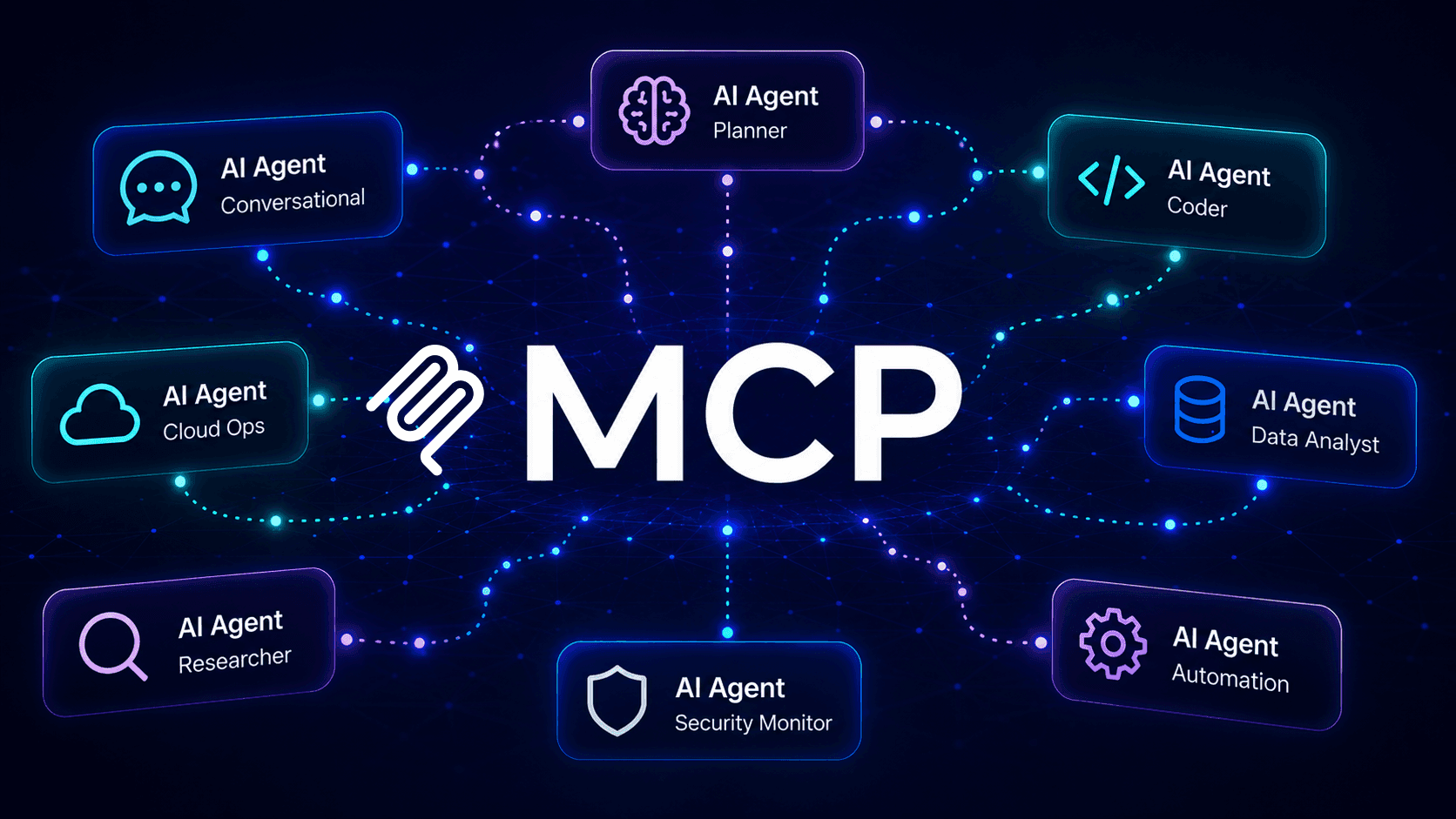
The Model Context Protocol (MCP) is quickly becoming one of the most important standards in the AI ecosystem.
Its purpose is straightforward: provide a common way for AI systems to discover capabilities, access information, and interact with external services.
Just as APIs standardized communication between software systems, MCP is helping standardize communication between AI systems and the tools they use.
This is a significant achievement. Without a common protocol, every AI platform would require custom integrations for every CRM, ticketing system, document repository, or business application it needed to access.
MCP solves that problem.
But as organizations move from experimentation to production, another challenge is beginning to emerge.
MCP Solves Discovery
Modern software systems are built around reusable capabilities.
A customer platform manages customers. A billing platform manages invoices and payments. A support platform manages tickets.
Complex business processes are created by combining those capabilities.
For example, resolving a billing dispute might require:
- Retrieving customer information
- Reviewing invoices
- Checking payment history
- Looking for open support cases
- Creating or updating a ticket
No single system owns the entire process.
Instead, the process emerges through coordination.
MCP is exceptionally good at describing these capabilities. It tells an AI system:
- What tools are available
- What information can be accessed
- What actions can be performed
In other words, MCP answers the question:
"What can I do?"
What it does not answer is:
"How should I do it?"
The Difference Between a Team and a Playbook
Imagine assembling a football team.
- You recruit talented players.
- You provide equipment.
- You hire coaches.
- You gather information about opponents.
- Have you built a championship team?
Not necessarily.
You have assembled resources.
What determines success is often something else entirely: the playbook.
The playbook defines:
- Which actions should be taken
- In what sequence
- Under what conditions
- How different resources should work together
The same distinction exists in AI systems.
MCP does an excellent job describing the players on the field. It describes tools, resources, and capabilities. What it does not currently describe is the playbook.
Why Bigger APIs Are Not the Answer
A natural response is:
"If a billing dispute always requires several tools, why not create a single endpoint called Resolve Billing Issue?"
The problem is that this pushes business workflows into individual services.
Modern architectures intentionally avoid this. A billing system should understand billing. A customer platform should understand customers. A support platform should understand support.
Services should expose reusable capabilities, not every workflow that might be built from those capabilities. Otherwise they become tightly coupled, harder to maintain, and less reusable.
The answer is not bigger APIs.
The answer is a better way to describe how existing capabilities should be combined.
A Playbook Layer for MCP
Organizations already solve this problem every day.
They create:
- Operating procedures
- Support guides
- Onboarding processes
- Escalation policies
- Best practices
These are all forms of playbooks.
They do not replace systems. They describe how systems should be used together to achieve a particular outcome. A similar concept could exist within MCP.
Imagine an MCP server exposing tools such as:
- Find customer
- Retrieve invoices
- Retrieve payment history
- Create ticket
Alongside those tools, it could expose task definitions.
For example:
Task: Resolve Billing Issue
Objective
Determine whether a customer's billing concern is caused by an unpaid invoice, a payment issue, or an existing support case.
Guidance
- Identify the customer.
- Retrieve recent invoices.
- Review payment history.
- Check for open support cases.
- Create or update a ticket if necessary.
- Provide a summary of findings.
The underlying services remain unchanged.
The task definition simply provides operational guidance describing how those capabilities are typically combined.
In practice, a task definition could contain just two elements:
- A concise objective
- A detailed workflow description
Together they form a reusable playbook.
A standardized task layer could make that knowledge discoverable, reusable, and portable across AI systems.
The Token Problem
Of course, all of this comes with a cost.
Every workflow description takes up context. Every instruction burns tokens. And every interaction requires the model to work through information it may have already processed hundreds or thousands of times before.
As organizations add more operational knowledge, that starts to become wasteful. This is where protocol-level task definitions get interesting.
If someone is onboarding a customer, the system doesn’t need to load billing dispute procedures. If it’s handling a support escalation, it doesn’t need product configuration workflows.
It only needs the tasks that matter for the job at hand. And because those task definitions are standardized, they can be cached.
Once a task becomes a stable protocol artifact, platforms can recognize it, store it, and reuse it across interactions instead of reprocessing the same guidance over and over again.
The result is simple: less context spent on repeating instructions, and more attention available for solving the actual problem.
Beyond Interoperability
MCP is solving one of the most important challenges in AI today: interoperability.
But interoperability is only the first layer. MCP standardized capabilities. The next opportunity may be standardizing operational knowledge.
Not by creating larger APIs. Not by embedding workflows into services. But by providing a lightweight, discoverable, and cacheable way to describe how capabilities should be combined to achieve real business outcomes.
The future of AI may depend not only on the tools available to an agent, but on the quality of the playbooks that teach it how to use them.
Marc Schipperheyn
Contributor
Deeply passionate about technology, design, and building beautiful, high-performance platforms. Check out more articles from the team or explore our services below.